
Event-driven oracles 2026 limits to account for
The term "event-driven oracles" in 2026 has become a source of confusion because it collides with two distinct technological realities. For blockchain developers, the phrase describes decentralized networks that push real-time data to smart contracts the moment an external event occurs. For enterprise IT leaders, it often refers to Oracle Corporation’s internal automation tools and cloud infrastructure strategies. This semantic overlap creates noise when searching for specific solutions, making it essential to separate the DeFi protocol from the database giant.
In the decentralized finance (DeFi) sector, the 2026 landscape is defined by low-latency, push-based oracle networks. Unlike traditional pull-oracles that require a contract to request data, event-driven systems monitor off-chain events—such as price fluctuations, weather changes, or supply chain updates—and trigger on-chain transactions automatically. This shift reduces gas costs and latency, enabling complex financial instruments like conditional yield farming and automated liquidations to operate with greater precision. The constraint here is not just speed, but the reliability of the trigger mechanism itself; a failed event push can halt entire DeFi protocols.
Conversely, Oracle Corporation is undergoing a massive structural overhaul in 2026. The company has cut approximately 21,000 jobs worldwide as it accelerates its AI-led transformation, aiming to streamline its enterprise cloud offerings. While this is not directly related to blockchain oracles, the term "event-driven" is frequently used in Oracle’s marketing for its Autonomous Database and Event Grid services, which process real-time data streams for enterprise customers. This corporate restructuring and strategic pivot toward AI-driven automation are the primary drivers of news regarding "Oracle 2026 plans," often overshadowing niche blockchain developments in search results.
Understanding this distinction is critical for anyone navigating 2026’s tech landscape. If you are building a DeFi application, you need to evaluate oracle networks like Chainlink or Pyth based on their event-trigger reliability and cross-chain compatibility. If you are an enterprise architect, you are likely evaluating Oracle’s Cloud Infrastructure for its ability to handle real-time event processing at scale. The two worlds share terminology but operate on completely different technical and economic foundations.
Event-driven oracles 2026 choices that change the plan
Choosing an event-driven oracle in 2026 requires balancing three competing priorities: latency, cost, and decentralization. Unlike static price feeds, event-driven architectures react to specific state changes, meaning the tradeoffs are less about raw data accuracy and more about how quickly and cheaply you can trust those reactions. The following comparison breaks down the concrete factors you should evaluate when selecting an oracle provider for real-time DeFi automation.
| Factor | Latency | Gas Cost | Trust Model |
|---|---|---|---|
| Chainlink Functions | Near-real-time (sub-second) | Moderate (compute-heavy) | Multi-signature + EVM verification |
| Pyth Network | Ultra-low (sub-second) | Low (native integration) | Stake-weighted publisher network |
| API3 | Real-time (push model) | Variable (first-party oracles) | Direct API oracles with dAPIs |
| Custom Chainlink Automation | Configurable (seconds to minutes) | High (complex triggers) | Decentralized node network |
The table above highlights that no single oracle is optimal for all use cases. For high-frequency trading bots, Pyth’s stake-weighted network offers the lowest latency, but it relies on a smaller set of known publishers. For complex logic requiring external data verification, Chainlink Functions provide flexibility at the cost of higher gas fees. API3’s first-party oracles reduce data intermediary risk but require careful integration with dAPIs.
Cost vs. Speed Analysis
When evaluating these tradeoffs, consider the frequency of your oracle calls. If your protocol triggers on every block, the gas cost of a complex Chainlink Functions call can quickly outweigh the benefits of precise data. Conversely, if your strategy relies on rare events, the slight delay in Pyth’s update cycle might be acceptable. Always calculate the total cost of ownership, including both the oracle subscription fees and the gas consumed by your smart contracts.
Decentralization and Security
Finally, assess the trust model. Decentralized networks like Chainlink distribute risk across many nodes, making them resistant to single-point failures. However, this comes with higher complexity and cost. First-party oracles like API3 offer a middle ground, reducing intermediary risk while maintaining lower operational overhead. For 2026, the trend is toward hybrid models that combine the speed of specialized networks with the security of decentralized verification layers.
The future of oracles isn't just about faster data; it's about verifiable, event-driven trust that scales with the complexity of DeFi automation.— DeFi Security Researcher
How to Choose the Right Event-Driven Oracle for 2026
Selecting an oracle solution requires matching data latency and reliability to your specific DeFi use case. Not every protocol needs real-time feeds, and over-engineering with event-driven architectures can introduce unnecessary complexity and cost. Start by auditing your protocol’s risk profile and data requirements before committing to a specific oracle provider or integration method.
Not all DeFi products require sub-second data updates. Stablecoin peg maintenance or lending rate adjustments often function adequately with aggregated data refreshed every few minutes. Reserve event-driven oracles for high-frequency trading platforms, liquidation engines, or derivatives that react to market volatility in real time. Matching the data frequency to the actual risk window prevents overpaying for infrastructure you don’t need.
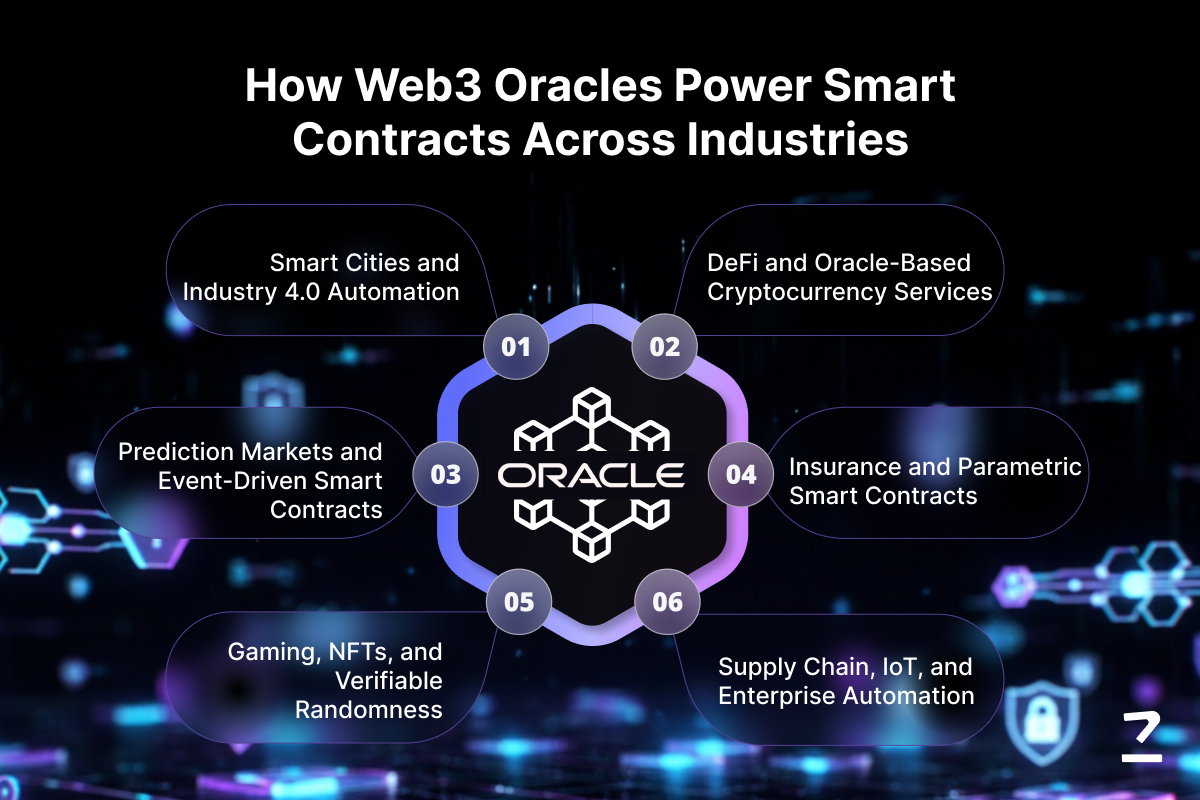
Single-source oracles create a critical point of failure. Prioritize networks that aggregate data from multiple independent validators and node operators. Check if the oracle network has a proven track record of handling outages or data discrepancies without compromising protocol integrity. A decentralized data feed ensures that no single entity can manipulate prices to exploit your smart contracts.
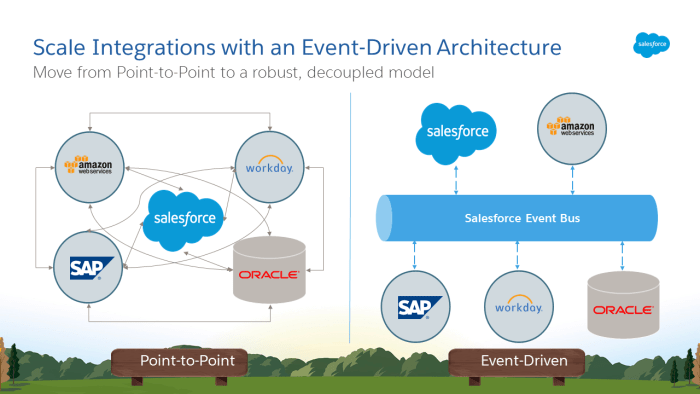
Even the most robust oracle is useless if your development team struggles to integrate it. Look for providers with comprehensive SDKs, clear documentation, and active community support. Event-driven architectures often require custom smart contract logic to subscribe to specific data events, so ensure the oracle’s API aligns with your existing codebase and technical capabilities.
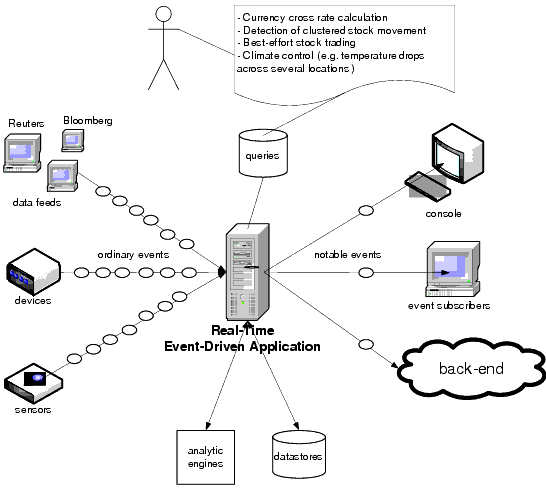
Real-time data feeds and event subscriptions can significantly increase gas costs on-chain. Compare the per-update fees and subscription models of different oracle networks. Some providers charge based on data frequency, while others offer flat-rate packages for high-volume protocols. Choose a solution that balances data freshness with your protocol’s budget constraints to avoid unsustainable operational costs.
The 2026 Oracle plan is a balance sheet reset
Oracle’s 2026 roadmap is defined by a $45 to $50 billion financing strategy designed to strengthen its investment-grade balance sheet. This plan relies on a mix of debt and equity to fund operations while the company accelerates its AI-led restructuring. The goal is to maintain financial stability during a period of significant operational change.
Layoffs are already in motion
The workforce reduction is not a future threat but a current reality. Oracle cut approximately 21,000 jobs worldwide in fiscal 2026 as part of its shift toward AI. The company has stated that wider AI deployment has already reduced headcount needs and may lead to further cuts in the future. This restructuring is central to their operational efficiency strategy.
Key events to watch
Oracle is maintaining a heavy event schedule to showcase its latest developments. The Analytics and Data Summit 2026 will take place April 14–16 at the Oracle Conference Center in Redwood Shores, California. Additionally, major gatherings are scheduled for Copenhagen (June 23–25) and Milton Keynes (June 24), providing opportunities to see the company’s technical direction firsthand.
Event-driven oracles 2026: common: what to check next
The landscape for event-driven oracles and real-time data feeds is shifting rapidly as enterprises like Oracle pivot toward AI-driven automation. Below are the most practical questions readers ask when evaluating these systems for 2026.
These shifts highlight a clear trend: the value of oracles is moving from simple data aggregation to active, event-driven decision-making. Understanding these structural changes is essential for building resilient DeFi and enterprise automation systems in 2026.
No comments yet. Be the first to share your thoughts!