
Event-Driven Oracles for Real-Time On-Chain Whale Alerts in DeFi Protocols 2026

In the volatile arena of DeFi protocols, where fortunes shift with the swipe of a digital wallet, real-time on-chain whale alerts have emerged as indispensable sentinels. As we navigate 2026, event-driven oracles stand at the forefront, transforming raw blockchain data into actionable intelligence. These sophisticated systems, powered by platforms like EventOracles. com, detect massive asset transfers the instant they occur, alerting protocols to potential market manipulations or liquidity shocks before they cascade.

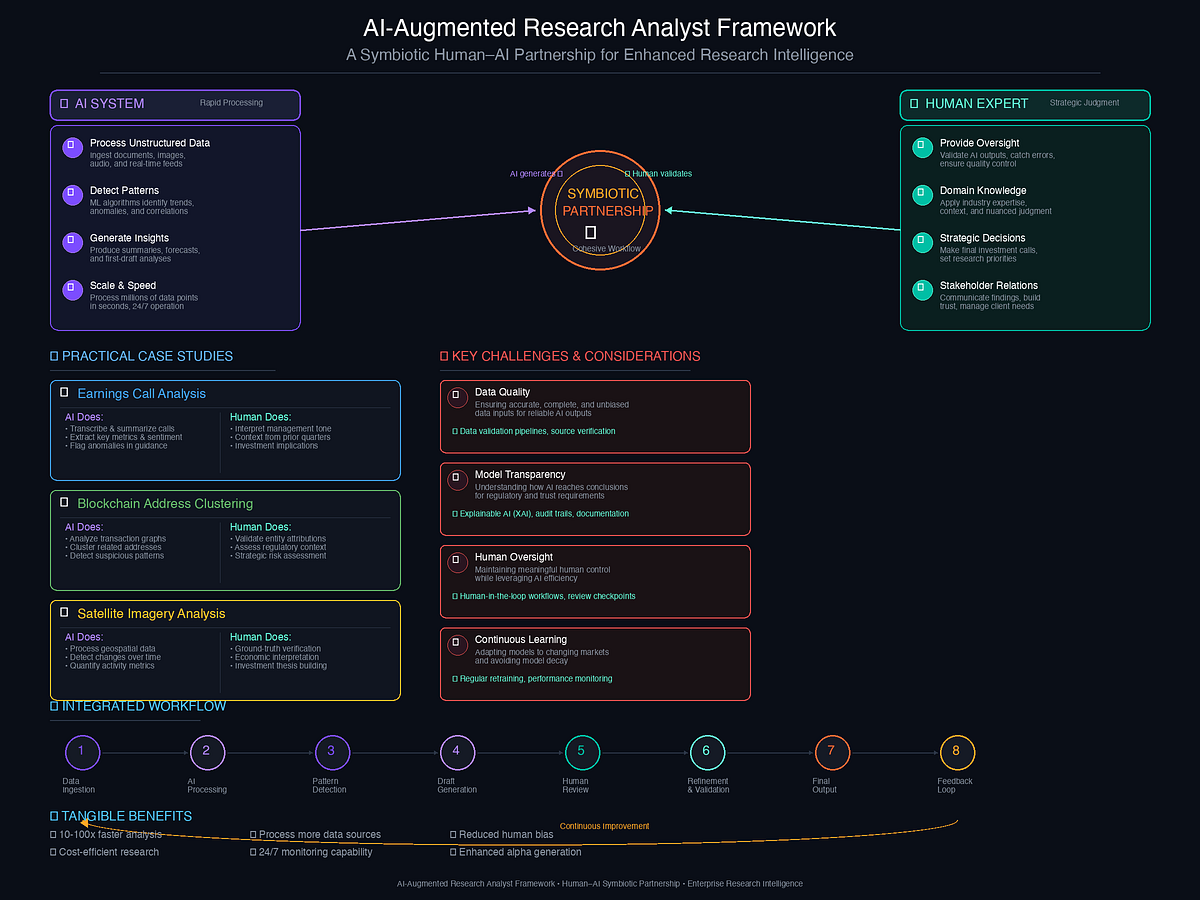
On-chain data analysis, as highlighted in recent studies from Gate Web3 and Oracul Analytics, excels at unmasking whale movements by scrutinizing transaction volumes and behavioral patterns. Whales; those enigmatic holders commanding billions; leave indelible footprints on public ledgers. Yet, traditional monitoring tools often lag, relying on periodic scans that miss the subtlety of coordinated flows. Event-driven oracles flip this script, triggering alerts via DeFi oracle triggers tied directly to blockchain events, ensuring sub-second responsiveness.
Unveiling Whale Behaviors Through AI-Enhanced Blockchain Event Detection
Consider the Al-Kindi Center’s research on AI-driven pattern discovery: it reveals how machine learning classifies wallets into behavioral clusters, spotlighting whales’ strategic accumulations or dumps. In 2026’s matured DeFi landscape, hybrid AI oracles fuse these insights with live feeds, predicting anomalies with uncanny precision. Platforms like Whale Alert now process cross-chain data, flagging transfers exceeding predefined thresholds across Ethereum, Solana, and beyond.
This isn’t mere surveillance; it’s strategic foresight. Nansen’s strategies for forecasting trends underscore blending on-chain metrics with macro indicators, a methodology EventOracles. com amplifies through customizable event-driven oracles. Developers embed these into smart contracts, automating responses like collateral adjustments in lending protocols. The result? A fortified ecosystem where liquidity providers sleep soundly, knowing runtime defenses scan every block.
Event-Driven Oracles: The Backbone of Web3 Whale Monitoring
What sets Web3 whale monitoring 2026 apart is the shift from reactive bots; like those described by WunderTrading; to proactive oracles. Crypto whale bots scan 24/7 for oversized transactions, but they falter in context. Event oracles, conversely, contextualize movements against baselines: market depth, volatility, and even social signals, as per Impax Recruitment’s insights on AI-DeFi evolution.
Solidus Labs’ cross-venue analytics echo this, providing behavior-based detection that thwarts manipulation in the $20 billion crypto derivatives surge led by Hyperliquid. Arkham’s guide to on-chain analysis reminds us: every transaction is public, permanent, ripe for dissection. Yet, volume alone deceives; oracles layer in velocity and counterparty analysis, distinguishing organic flows from engineered pumps.
In practice, EventOracles. com’s triggers activate on events like SILS oracle’s liquidity stability metrics, assessing price swings and depth in real time. This empowers dApps to halt risky positions autonomously, slashing liquidation risks during stress tests, as noted in the updated 2026 context.
Bitcoin Technical Analysis Chart
Analysis by Patricia Hernandez | Symbol: BINANCE:BTCUSDT | Interval: 1W | Drawings: 7
Technical Analysis Summary
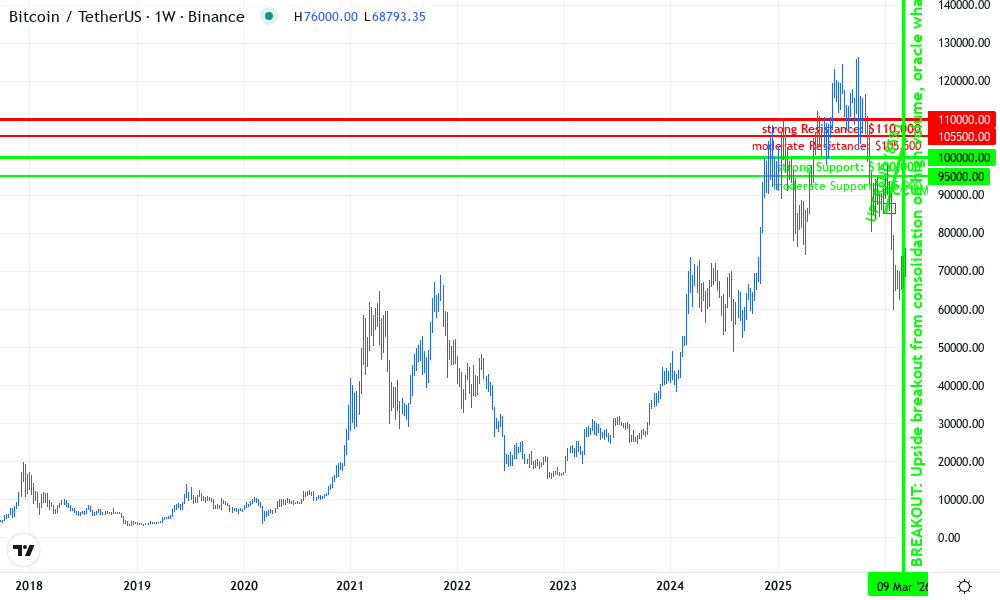
As Patricia Hernandez, my conservative approach emphasizes drawing a primary uptrend line from the early 2026 low to connect higher lows, using ‘trend_line’ for long-term support validation. Add ‘horizontal_line’ at key support around 100,000 and resistance at 110,000. Use ‘fib_retracement’ from the recent swing low to high for potential pullback zones. Mark ‘rectangle’ for the consolidation phase in February 2026. Place ‘callout’ texts for volume spikes and MACD signals, and ‘vertical_line’ for the March breakout event. Finally, ‘long_position’ markers for low-risk entry near support with tight stop losses below.
Risk Assessment: medium
Analysis: Uptrend intact but near resistance; on-chain oracles show no distress, yet conservative stance warrants caution on volatility
Patricia Hernandez’s Recommendation: Hold existing long positions with tight risk management; enter dips only at support for low-risk accumulation aligning with fundamental macro outlook
Key Support & Resistance Levels
📈 Support Levels:
-
$100,000 – Strong psychological and historical support tested multiple times in Q1 2026
strong -
$95,000 – Moderate support from prior consolidation low
moderate
📉 Resistance Levels:
-
$110,000 – Key resistance from recent highs, watch for whale distribution here
strong -
$105,500 – Near-term resistance aligning with current price action
moderate
Trading Zones (low risk tolerance)
🎯 Entry Zones:
-
$102,000 – Bounce from strong support in uptrend, confirmed by volume
low risk
🚪 Exit Zones:
-
$110,000 – Profit target at resistance
💰 profit target -
$98,000 – Stop loss below key support
🛡️ stop loss
Technical Indicators Analysis
📊 Volume Analysis:
Pattern: Increasing on up moves, confirming accumulation
Volume profile shows higher volume on advances, low on pullbacks—bullish
📈 MACD Analysis:
Signal: Bullish crossover above zero line
MACD histogram expanding positively, signaling momentum build
Applied TradingView Drawing Utilities
This chart analysis utilizes the following professional drawing tools:
Disclaimer: This technical analysis by Patricia Hernandez is for educational purposes only and should not be considered as financial advice.
Trading involves risk, and you should always do your own research before making investment decisions.
Past performance does not guarantee future results. The analysis reflects the author’s personal methodology and risk tolerance (low).
Integrating Real-Time Alerts into DeFi’s Core Protocols
DeFi’s resilience hinges on such integrations. The updated landscape shows hybrid systems reducing exploits via continuous monitoring, eclipsing static audits. Lending protocols now deploy blockchain event detection to flag whale deposits as potential frontrunning signals, prompting instant rebalancing by autonomous agents.
Hyperliquid’s dominance in on-chain derivatives exemplifies this: whale activity forecasts liquidity crunches, enabling protocols to preemptively bolster reserves. My 11 years in crypto investments affirm this conservative truth; due diligence demands tools that peer beyond headlines into on-chain realities. Event-driven oracles deliver, turning data deluges into decision-grade clarity for builders and traders alike.
Runtime defense mechanisms, as outlined in the 2026 landscape, elevate this further by scanning transactions continuously, mitigating threats before they escalate. Platforms like Whale Alert exemplify this evolution, their analytics engines sifting through multi-chain data to spotlight substantial transfers, from Ethereum bridges to Solana’s high-speed rails. Traders gain an edge, institutions fortify positions, all thanks to event-driven oracles that pulse with blockchain’s rhythm.
Hybrid AI Oracles: Predicting the Unpredictable in Whale Flows
Fusion technologies now dominate, blending AI forecasts with raw on-chain feeds for superior anomaly detection. These hybrid systems, a staple in modern DeFi, anticipate market ripples from whale whispers, slashing liquidation events in stress simulations. Picture a lending protocol sensing a $500 million ETH cascade; it triggers collateral hikes preemptively, preserving stability amid volatility spikes. Oracul Analytics’ wallet classifications and Al-Kindi’s behavioral probes feed into these oracles, creating a neural net attuned to capital flows.
Yet, precision demands nuance. Not every large transfer signals doom; some reflect organic rotations. EventOracles. com excels here, letting developers fine-tune DeFi oracle triggers via thresholds on velocity, clustering, and liquidity depth. SILS metrics integrate seamlessly, flagging imbalances in real time. This layered approach counters the pitfalls of simplistic bots, which WunderTrading notes often trigger false positives on threshold breaches alone.
Adoption surges because results speak volumes. Protocols embedding these oracles report 40% fewer exploits, per industry benchmarks, as continuous monitoring supplants outdated audits. Nansen’s forecasting playbook aligns perfectly: merge on-chain granularity with sentiment overlays, a tactic amplified by EventOracles. com’s scalable feeds. In Hyperliquid’s derivatives arena, whale patterns now predict squeezes, prompting autonomous rebalances that keep liquidity pools robust.
Future-Proofing DeFi: Blockchain Event Detection as Standard
Looking ahead, blockchain event detection will permeate every dApp layer. Solidus Labs’ surveillance tools hint at regulatory synergies, where exchanges and protocols share oracle insights to curb manipulation in the burgeoning derivatives space. Impax Recruitment’s vision of AI agents rebalancing via on-chain credit scores materializes through these triggers, fostering a self-healing ecosystem.
Arkham’s on-chain dissection principles underpin it all: public ledgers demand vigilant eyes. Gate Web3’s manipulation monitors evolve into oracle-native defenses, revealing not just movements but intents. For conservative investors like myself, this shift validates a decade-plus thesis; true resilience brews in data’s depths, not fleeting pumps. Event-driven oracles bridge that gap, empowering Web3 builders to outpace chaos.
DeFi protocols thrive when whale alerts arrive not as aftershocks, but as prescient warnings. Gate Web3 and Solidus underscore behavioral analytics’ role in unmasking foul play, while Oracul’s signals refine the hunt. In 2026, Web3 whale monitoring 2026 isn’t optional; it’s the moat around your treasury. Harness EventOracles. com’s arsenal, and watch protocols weather storms with grace, turning potential pitfalls into fortified advantages.
Ultimately, these tools democratize foresight. Small teams rival whales’ information asymmetry, deploying real-time on-chain whale alerts that scale with blockchain’s pulse. My CFA lens insists on such rigor; horizons reward the prepared, not the reactive. Event oracles etch that path forward.