
Event-Driven Oracles for Real-Time On-Chain Triggers in DeFi Protocols 2026
In the high-stakes arena of DeFi protocols in 2026, every millisecond counts. Traditional oracles, with their pull-based queries, often lag behind the frenetic pace of on-chain events, leaving smart contracts vulnerable to slippage, unfair liquidations, and missed arbitrage windows. Enter event-driven oracles, the proactive sentinels that push real-time on-chain triggers directly to contracts when predefined conditions activate. Platforms like EventOracles. com exemplify this shift, delivering instant, reliable data feeds that align blockchain logic with live market dynamics, all while prioritizing security in an era of escalating threats.

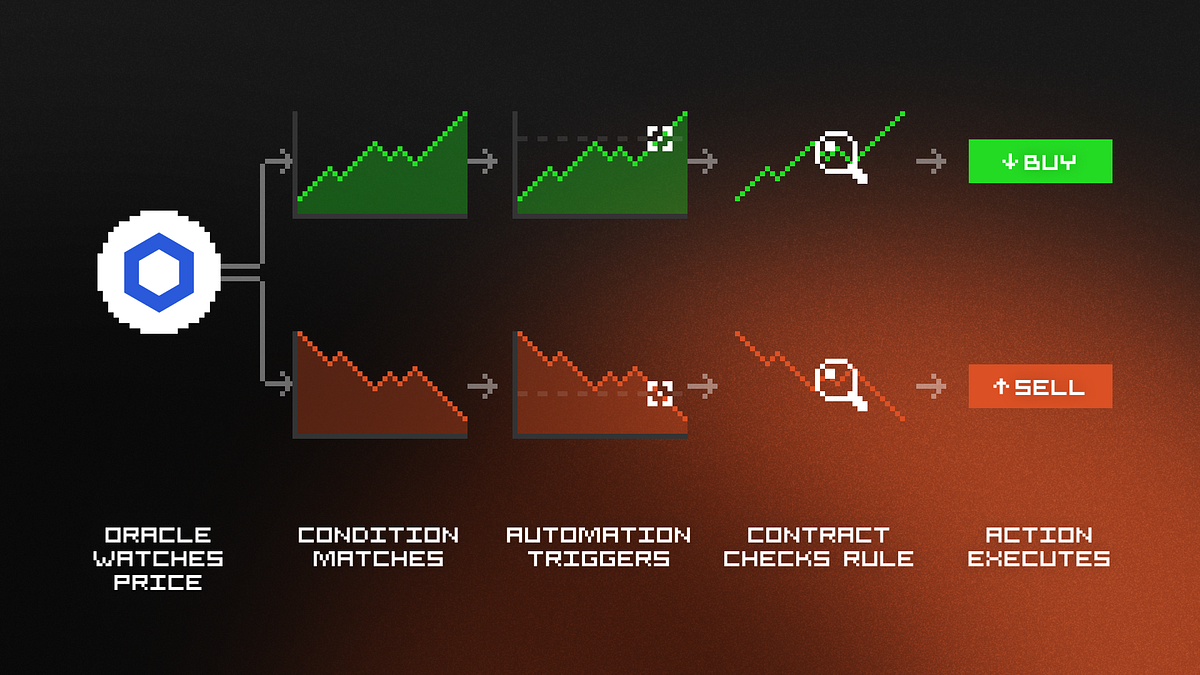
These blockchain event oracles transform passive data consumers into active responders. Imagine a lending protocol that anticipates a collateral dip before it cascades into mass liquidations; or a perp DEX that executes trades on sub-second price swings without front-running risks. By embedding triggers for events like threshold breaches or external milestones, they minimize reliance on user-initiated calls, slashing gas costs and boosting throughput in congested networks.
Bridging the Gap: How Event-Driven Oracles Outpace Legacy Systems
Legacy oracles, tethered to periodic polling, expose DeFi to the perils of stale data. The May 2025 Chainlink mishap on Avalanche, where a price feed glitch sparked $500,000 in forced liquidations, underscores this frailty. Delays amplified hidden risks, proving that in volatile markets, information asymmetry is a predator.
Event-driven alternatives flip the script. Push mechanisms activate only on relevance, conserving resources and ensuring instant smart contract data feeds. Qubic’s Oracle Machines and Chainlink Data Streams pioneer this for perps on GMX and Jupiter, enabling dynamic pricing that mirrors real-world flux. From my vantage in risk management, this isn’t mere convenience; it’s a bulwark against systemic cascades, where one faulty feed ripples into protocol insolvency.
Comparison of Pull-Based vs. Event-Driven Oracles
| Aspect | Pull-Based Oracles | Event-Driven Oracles |
|---|---|---|
| Latency | Higher (on-demand queries, minutes) ⏳ | Lower (proactive pushes, sub-second) ⚡ |
| Cost | Higher for frequent queries (gas per call) 💸 | Efficient subscription model for real-time 📉 |
| Security Risks | Data staleness, OEV/front-running attacks 🔓 | Oracle delays/failures, mitigated by ZKPs/AI 🚨 |
| DeFi Use Cases | Periodic price feeds, lending 🏦📊 | Liquidations 💥, perps trading 🔄, prediction markets 🎲, gaming/sports betting 🎮⚽ |
Consider prediction markets or insurance dApps: event oracles verify outcomes like sports results or weather anomalies without manual intervention, automating payouts and resolutions. StoneX notes how they empower actions on price movements or environmental shifts, extending smart contract utility far beyond isolated chains.
Real-Time Triggers: Powering DeFi’s Competitive Edge
DeFi oracle triggers shine in liquidations, the DeFi heartbeat prone to exploitation. Liquidation-aware oracles, now standard, forecast breaches and preemptively recalibrate, thwarting Oracle Extractable Value attacks that prey on delays. This proactive stance has become non-negotiable as TVL surges past trillions.
In gaming and sports betting, where outcomes demand immediacy, these oracles trigger bets or rewards on live events, fostering immersive, trustless experiences. Blockchain insurance leverages them for parametric policies; crop failures verified via weather data prompt instant claims, sidestepping disputes that plague traditional models.

Read the complete analysis 👇https://t.co/mOOCRCPE9r
Yet enthusiasm tempers with caution. Oracles remain bridges to off-chain realities, inherently exposed to manipulation as seen in the $8.8M InstaTunnel incident. Diversification across providers and threshold signatures mitigate single points of failure, a principle I advocate in hybrid hedging strategies.
Innovations Fortifying Reliability in 2026
Zero-knowledge proofs integrate seamlessly, verifying events privately without data leaks, ideal for sensitive feeds. Threshold AI Oracles elevate this further, employing AI deliberation and crypto signatures to distill real-world chaos into verifiable on-chain signals. Supra’s framework, for instance, supports automated decisions across dApps, from collateralization to event resolution.
These advancements address core vulnerabilities: latency, centralization, and verifiability. For developers building on EventOracles. com, the result is scalable, low-medium risk architectures that hedge on-chain exposures in stocks and crypto. Profits follow disciplined risk layers; ignore them at peril.
Implementing these oracles demands a layered approach. Developers must calibrate triggers meticulously, defining events with precision to avoid false positives that could cascade into erroneous executions. In my 14 years managing risks, I’ve seen overzealous automation amplify minor glitches into major setbacks; hence, hybrid models blending event-driven pushes with fallback pulls offer resilience.
Navigating Risks: Safeguards for Robust DeFi Oracle Triggers
Despite progress, event-driven oracles aren’t panaceas. The 2025 Avalanche incident lingers as a stark reminder: even reputable feeds falter under extreme volatility, igniting liquidations that erode trust. Oracle Extractable Value remains a specter, where MEV bots siphon value from delayed responses. My counsel? Prioritize DeFi oracle triggers fortified by multi-oracle aggregation and time-weighted average prices to smooth anomalies.
Key Risks of Event-Driven Oracles vs. Mitigation Strategies
| Risk | 2025 Incident Example | Mitigation Strategies |
|---|---|---|
| Latency Delays | May 2025: Chainlink price feed error on Avalanche blockchain led to $500,000 in forced liquidations | Push-based event-driven oracles for real-time triggers; Liquidation-aware oracles to predict and prevent delays |
| Manipulation | $8.8M oracle data manipulation incident (InstaTunnel) | Zero-Knowledge Proofs (ZKPs) for privacy-preserving verification; Threshold cryptographic signatures |
| Centralization | Reliance on single providers creating single points of failure (generalized from oracle failures) | Threshold AI Oracles with AI-driven deliberation and multi-node threshold signatures; Decentralized oracle networks |
Diversification reigns supreme. No single provider should dominate; instead, protocols like those on EventOracles. com integrate feeds from Chainlink, Qubic, and emerging AI oracles, creating a consensus safety net. Threshold cryptography ensures no lone actor sways outcomes, while zero-knowledge verifications cloak sensitive data, vital for institutional-grade DeFi hedging in stocks and crypto.
From prediction markets to parametric insurance, reliability underpins utility. Sports outcomes or regulatory shifts demand tamper-proof reporting; falter here, and user flight follows. Gaming dApps thrive on sub-second triggers for live events, but only if oracles deliver without exploitable lags. Cautious builders test exhaustively in shadow environments, simulating black swan events to harden contracts.
Future-Proofing with EventOracles. com
Looking ahead, 2026 heralds fusion of AI and oracles. Threshold AI systems, as Supra advances, deliberate on noisy real-world inputs, outputting consensus triggers with cryptographic backing. This suits complex DeFi like dynamic collateralization or cross-chain perps, where precision averts insolvency. Yet, I urge restraint: AI opacity invites new vectors; pair it with transparent, auditable layers.
EventOracles. com stands at this vanguard, tailoring real-time on-chain triggers for bespoke needs. Their platform empowers builders to deploy instant smart contract data feeds that respond to blockchain happenings – from price thresholds to on-chain votes – with unmatched scalability. Security audits, low-latency pushes, and modular integrations make it a low-medium risk choice for hedging protocols exposed to crypto volatility and equity swings.
In practice, envision a lending dApp hedged against flash crashes: EventOracles. com’s blockchain event oracles detect collateral erosion milliseconds ahead, triggering preemptive auctions sans user prods. Gas efficiency soars, throughput multiplies, and front-running evaporates. For prediction markets, real-world resolutions flow seamlessly, settling bets on elections or climate data without intermediaries.
This ecosystem maturity reshapes DeFi’s risk profile. Protocols once brittle now pulse with foresight, turning potential pitfalls into strategic edges. Developers, embrace these tools judiciously; layer defenses deeply. As markets evolve, those who master event-driven intelligence will navigate turbulence while others scramble. Risk managed, the path to enduring gains clarifies.