Defining event-driven oracles
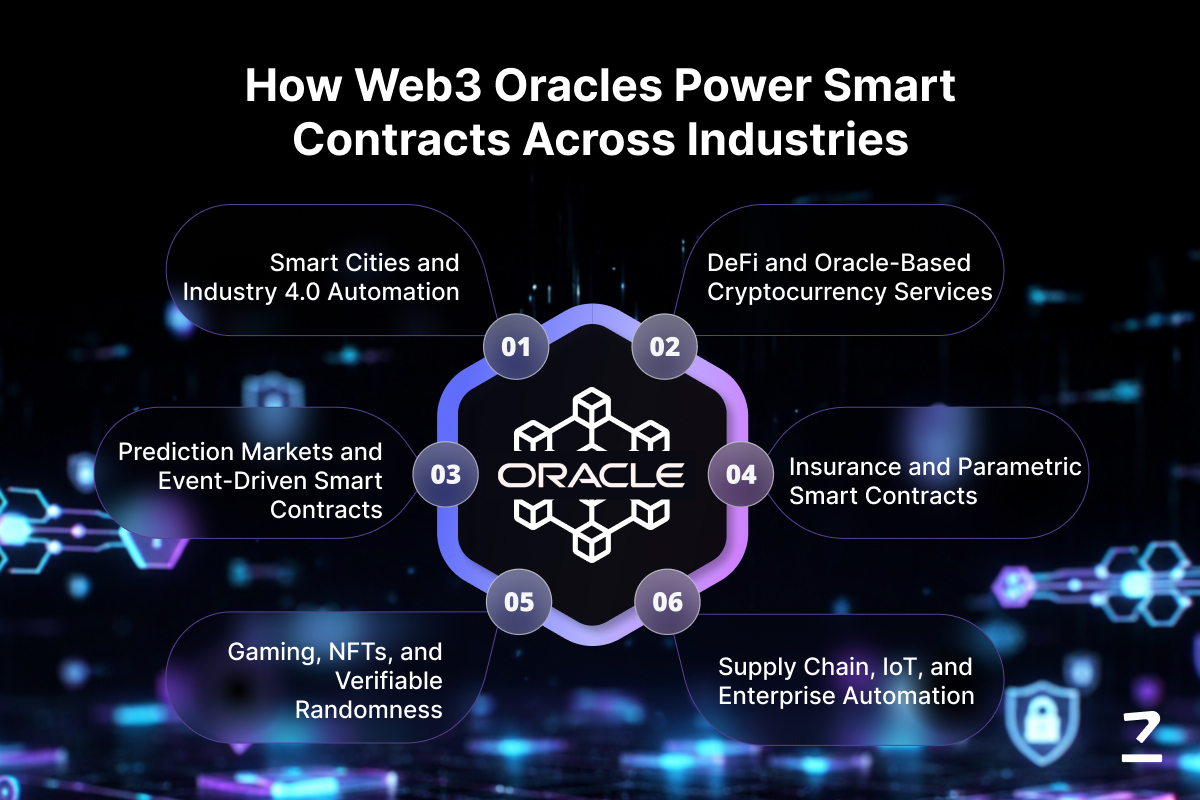
Traditional oracle networks operate on a polling model, where smart contracts periodically request data or oracles push updates at fixed intervals. This approach introduces latency and inefficiency, particularly in fast-moving decentralized finance (DeFi) markets where price shifts occur in milliseconds. Event-driven oracles represent a fundamental shift in how blockchain applications ingest external information. Instead of waiting for a scheduled query, these systems listen for specific triggers—such as a price crossing a threshold, a transaction confirmation, or a weather alert—and react immediately.
In this architecture, the oracle acts as a reactive listener rather than a periodic reporter. When an "event" occurs in the off-chain world, the oracle validates the data and broadcasts it to the blockchain only when necessary. This reduces network congestion and gas costs while ensuring that smart contracts have access to the most current state of affairs. The distinction is critical for applications requiring real-time responsiveness, such as liquidation engines in lending protocols or automated market makers that need instant price feeds to maintain pegs.
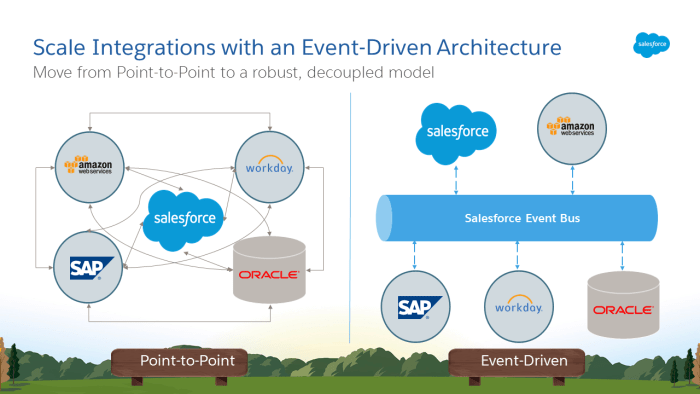
The move toward event-driven oracles aligns with the broader principles of event-driven architecture (EDA), which promotes loose coupling and asynchronous processing. By decoupling data generation from data consumption, DeFi protocols can scale more effectively. Microservices within the oracle infrastructure can handle spikes in demand independently, and the blockchain layer is only engaged when a significant change warrants a state update. This responsiveness transforms oracles from static data providers into dynamic, intelligent intermediaries that bridge the gap between static smart contracts and the fluid real world.
How event-driven oracles capture and push data
Traditional oracles often rely on polling—periodically querying a data source to check for updates. This creates latency and gaps in data freshness. Event-driven oracles solve this by listening for specific changes. When a relevant event occurs in the external world, the oracle captures it immediately. This mechanism removes the intermediate polling delays that plague static data feeds.
The process begins with an event source. This could be a blockchain transaction, a database update, or an IoT sensor reading. The oracle system subscribes to these sources using lightweight listeners. Unlike a poller that asks "is there new data?" every few seconds, the listener waits for a push notification. This asynchronous approach ensures that the oracle is aware of changes the moment they happen.
Once an event is captured, it must be validated before reaching the smart contract. Raw data is not trusted. The oracle node runs a verification routine, often checking cryptographic signatures or consensus among multiple nodes. This step ensures that the event is genuine and has not been tampered with during transmission. Only after validation does the oracle prepare the payload for on-chain execution.
The final step is pushing the validated data to the target smart contract. The oracle initiates a transaction that calls a specific function on the contract, passing the new data as an argument. This triggers an immediate state change within the DeFi protocol. The entire cycle—from external event to on-chain update—happens in near real-time. This architecture allows autonomous DeFi applications to react instantly to market shifts, oracle manipulations, or external triggers, maintaining accuracy and responsiveness without the lag of traditional polling systems.
Deploying autonomous contract logic
Event-driven oracles transform static smart contracts into responsive systems by bridging on-chain execution with off-chain triggers. Instead of relying on periodic polling, which introduces latency and gas inefficiencies, these oracles push data directly to the contract when specific conditions are met. This architecture allows DeFi protocols to execute complex actions—such as liquidations or yield redistributions—in near real-time, ensuring that the protocol state accurately reflects market conditions without manual intervention.
1. Define the trigger conditions
Before deploying, developers must establish precise criteria for when an oracle event should fire. In a liquidation scenario, this involves setting a health factor threshold (e.g., below 1.05) based on the real-time price of collateral assets. The oracle must be configured to monitor the underlying data feeds and emit an event only when the price movement breaches this defined boundary. This step ensures that autonomous actions are triggered only when mathematically necessary, preventing unnecessary transaction execution or front-running attacks.
2. Implement the listener contract
The core of the integration is a listener contract that subscribes to the oracle’s event stream. This contract acts as the intermediary, receiving the raw data payload from the oracle and validating its integrity. It typically includes a simple verification step to ensure the data signature matches the trusted oracle provider. Once validated, the listener passes the data to the main protocol logic, effectively decoupling the data ingestion layer from the business logic layer. This separation enhances security and allows for easier upgrades to either component independently.
3. Execute the autonomous action
Upon receiving validated data, the protocol executes the predefined autonomous action. For liquidations, this might involve transferring collateral from an under-collateralized borrower to a liquidator in exchange for a discounted amount of debt tokens. In yield redistribution, it could mean automatically reallocating rewards to stakers based on current participation rates. The execution must be atomic to prevent partial state changes; if any step fails, the entire transaction reverts, preserving the integrity of the protocol’s state.
4. Verify and log the outcome
After execution, the system logs the outcome on-chain for transparency and auditability. This log includes the trigger price, the action taken, and the resulting state changes. Developers can use this data to monitor system health and optimize trigger thresholds over time. Additionally, off-chain monitoring tools can subscribe to these logs to provide real-time dashboards for users, ensuring that all autonomous actions are visible and verifiable.
Latency and reliability trade-offs
Event-driven oracles must resolve a fundamental tension: speed versus decentralization. In high-frequency DeFi markets, a delay of even a few seconds can mean the difference between a profitable liquidation and a failed transaction. However, achieving sub-second finality typically requires trusting a smaller, centralized set of validators, which reintroduces the single-point-of-failure risks that oracles were designed to eliminate.
Network propagation times are the primary bottleneck. When an oracle node detects a price shift, it must broadcast the signed event to the blockchain. If the node is geographically distant from the validator set, latency increases. To mitigate this, some protocols use a "fast path" for trusted validators, bypassing the full consensus mechanism for minor price updates. This approach reduces latency but narrows the trust horizon.
To balance these constraints, many event-driven oracles employ a hybrid model. They use decentralized consensus for large, suspicious price movements while relying on pre-approved, low-latency feeds for normal market conditions. This ensures that routine trades execute instantly, while the system falls back to rigorous verification only when anomalies are detected.
| Approach | Latency | Decentralization | Primary Risk |
|---|---|---|---|
| Centralized Fast Path | Sub-second | Low | Censorship or manipulation |
| Full Consensus | 15-60 seconds | High | Missed opportunities/Slippage |
| Hybrid Threshold | Variable | Medium | Complexity in threshold tuning |
The choice between these models depends on the specific use case. For stablecoin collateralization, a slightly slower but more secure update is often preferred. For arbitrage bots, the fastest possible feed, even if less decentralized, may be necessary to capture fleeting opportunities.
Common implementation mistakes
Building an event-driven oracle requires more than just connecting data feeds to smart contracts. Developers frequently overlook the nuances of asynchronous environments, leading to fragile systems that fail under load or produce incorrect state updates. Understanding these pitfalls is essential for maintaining the integrity of autonomous DeFi protocols.
Ignoring event ordering
Events arriving out of sequence are a primary cause of oracle failures. If a contract processes a price update from Tuesday before one from Monday, the resulting state may be invalid or exploitable. Developers must implement sequence numbers or timestamps to enforce strict ordering. Without this check, the oracle becomes vulnerable to reordering attacks where malicious actors manipulate the delivery sequence to trigger unfavorable liquidations or arbitrage opportunities.
Failing to handle asynchronous delays
Event-driven architectures are inherently asynchronous, meaning data does not always arrive at the exact moment it is generated. Network latency, node synchronization issues, or oracle node failures can cause significant delays. Developers often assume real-time delivery, leading to timeouts or dropped events. Implementing robust retry mechanisms and acknowledging event receipt is critical. The system must gracefully handle these delays without freezing the entire protocol or executing trades on stale data.
No comments yet. Be the first to share your thoughts!